
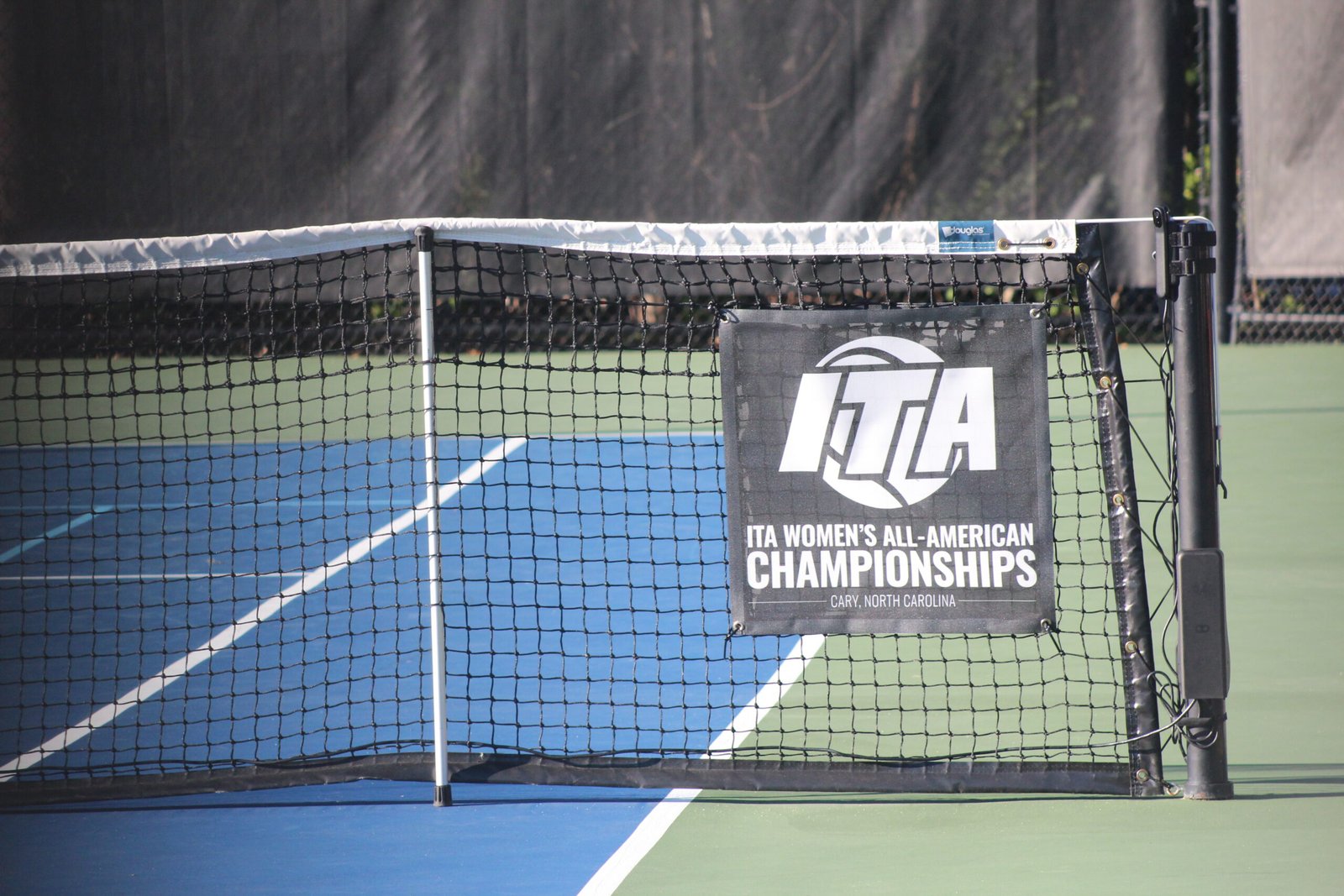
We got a taste of an optimized form of college tennis in Tulsa, Oklahoma at the ITA Men’s All American Championships.
At this point, all of the biggest college tennis events have utilized electronic line calling and a challenge system for about a year. But to open the 2026 fall campaign, the ITA and Tulsa took it a step further as they implemented a pilot program with live automatic line calling, erasing the need for challenges. When the ball goes out, an audible shout is heard from the system, alerting everyone of an out call and removing the need for players to call their lines.
One of the biggest takeaways from the pilot program was how much time was saved with the technology.
“The biggest difference I see is overall, the matches are flowing without as many interruptions or arguments over line calls as you have with either the challenge system or with the officials overruling clear mistakes by the players,” ITA Director of Officiating and General Counsel Anthony Montero said.
“You’d probably save 30% more time — absolutely quicker matches,” Tulsa men’s tennis head coach said.
More than just saving time, live line calling removes the potential for unfair gamesmanship where players make bad faith calls. Something that still happens, even with the challenge system.
“It keeps everybody in check because you know how college tennis goes,” Westbrook said. “And whenever you have one person running and having to make a call, it sometimes at best is 50/50, and then you factor in sometimes, gamesmanship.”
Electronic line calling was first piloted by the ITA in 2024 at the ITA Men’s All American Championships in Tulsa. It was also piloted at a number of other events including the men’s and women’s indoor championships. In 2025-26, it was officially approved for widespread use at any institution or tournament willing to make the investment, with roughly 19 venues putting it to use and seeing action on a total of 186 courts, albeit mostly indoors.
Why did we even bother with a challenge system for two years, rather than going straight to live calling if the technology was available? It’s not like there is a tradition of line judges that traditionalists seek to preserve as we’ve seen in the professional game. There were a few different obstacles to overcome first.
“For the challenge system, we don’t have to worry about call latency issues,” Montero said. “We don’t just want an accurate out call, we want it in under a second after the ball bounces, so latency becomes a big concern. And then the second thing is that it needs to be accurate all the time. We want it to make sure that it’s making an accurate call when the ball is a foot out versus a millimeter out.”
That second point seems obvious until you consider the idea that a malfunctioning or inaccurate PlayReplay system is much less impactful with the challenge system. Challenges will only come on a small percentage of the points and Electronic Line Calling will only be used occasionally, versus a live system where it will likely dictate more than half of points.
PlayReplay is said to be accurate on 99.9% of shots, using four high-speed cameras and an AI algorithm to calculate if the ball is headed in or out.
“I talk to the players and coaches, they all have their theories as to when it is less accurate,” Montero said. “Certainly one of those is people have said, is when the ball hits the net. The other time that you hear is slow lobs.”
Whether 99.9% is a good threshold for accuracy is a fair question, but it is probably better than the human eye from across the court or players calling their own lines. But at this point, the technology has surpassed the technological barriers.
The biggest barrier for more widespread implementation is cost. Coach Westbrook’s outlook on the matter is pretty standard from what I’ve heard from other members of the college tennis community.
“I think that those companies need to be smarter and more realistic that this isn’t the pros and there’s not that type of money in tennis, period,” Westbrook said. “They need to be smart and better businessmen. Hire marketing people to help you because it’s unrealistic the numbers that they’re charging. Their service isn’t that good, and they need to be a lot better for what they’re charging. I wouldn’t b**** as much if we didn’t have the investment that we have. And the more people that are let in, it will drive the price down. Everybody should have this, it should be affordable.”
A quick google search will tell you PlayReplay is currently searching for a Chief Marketing Officer if the career page of their website is regularly updated.
The technology is loaned out with a yearly subscription fee on a per-court basis, with estimates showing the cost to come up at around $24,000 per year for six courts. The technology still seems to be worth it for schools looking to host major events and stay on the cutting edge of college tennis.
“I would think that all national events should have this and regional events,” Westbrook said. “Everyone is always trying to be fair, we want everybody to have the opportunity to host and do things. Well, if you’re going to do that and you have the facilities to do that, you should have this.”
“The whole goal is ‘how do we keep the focus?,’” Montero said. “There’s such amazing tennis being played in college. How do we keep the focus on the college tennis and not the circus?”
Expect another live electronic line calling pilot in the coming months, likely at the men’s and/or women’s indoor championships.